
6 REAL Reasons Why You Need A Mobile-Optimized Website
We’ve all heard the saying, “If you build it, they will come.” But what about that other saying: “If you build it right, they&...
If you’re in the home services space and trying to grow your online visibility, you’ve probably heard the term “backlinks.” But what exactly are they, and why do they matter?
In this article, you’ll learn what makes a backlink valuable, why quality trumps quantity, and how to build real, local connections that produce genuine results. We’ll break it all down step by step in this webinar by Blue Crocus Solutions, so you can strengthen your online presence, improve your search rankings, and ultimately grow your business.
Think of a backlink like a vote. Just like a homecoming queen gets crowned through votes, your website earns credibility through backlinks.
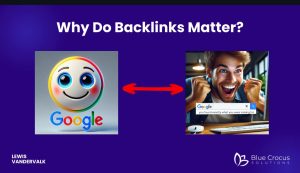
When one website links to another, that’s a signal to Google: “This site matters.” It’s one of over 200 ranking signals Google uses to decide which pages deserve attention. And yes—backlinks still carry serious weight. Agencies may try to say otherwise, but data and testing prove they matter.
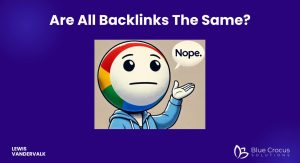
But not all backlinks are equal.
Some are fluff, bought, irrelevant, spammy. Others are powerful, organic, relevant, rooted in real relationships.
We’ve seen backlinks come in from podcasts, local charities writing about our business, even Facebook pages. It all contributes.
Backlinks still matter. Google might not say it out loud, but SEO experts know better. While the search engine pushes one message publicly, real testing by agencies shows a different story. The websites that consistently rank at the top all share one thing in common—backlinks that count.
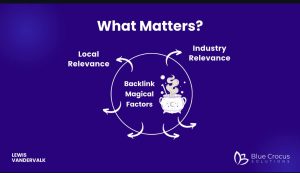
Backlinks are not one-size-fits-all. Some help you rank. Others can hurt you. That’s why understanding what makes a good backlink matters. It’s not about buying 100 backlinks for $5 or spending $500 on one magical link. The value comes down to where the link is from, what it points to, and why it exists.
We’re keeping this tactical. You’re going to leave with tips you can apply right now. The focus here is local relevance and topical relevance—meaning links that make sense both by your location and your industry.
Your weekly goal: pick just one idea and do it. Build one backlink a week and let it compound.
Let’s break down backlink types with what I call the Backlink Bicep Test:
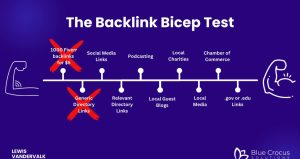
Now that you know the difference, let’s take action.
Start simple. Local directories are one of the easiest to get.
Example for Atlanta:
Some may be owned by agencies. Reach out, ask to be listed. Many have forms where you can just claim your business right away.
Also, look for “Best Of” lists:
Once you’re listed, ask people to vote. Share it on Facebook, post your results, showcase the win on your website. Now you’ve got backlinks and a bunch of brand authority stacking up.
And don’t forget about charities:
Think: who do you already support, and who could you reach out to? Offer support or in-kind help and ask if they’d list you on their site.
One more thing—if you signed up over email, you’ll get the full replay and the worksheet I mentioned. In that worksheet, I included:
Even better, if you’re not sure where to start, just copy the search template, replace the city, and run wild.
One backlink a week. That’s all it takes.
Backlinks don’t have to come from high-tech strategies or complicated SEO tools. In fact, some of the most effective links come from the relationships you’re already building in your community. You just need to know how to turn those real-world connections into digital trust.
You’ve got options here. From youth groups and sports teams to health-focused organizations, food banks, shelters, and local rotary clubs — the opportunities are endless. The key is to get creative and think of ways you can support them.
You don’t always have to give money. You can offer support in-kind. Here’s an example:
We once supported the local Ferton Marathon with our junk removal company. We were just starting out, so instead of cash, we offered our branded trailer for the event. It served as a cleanup station for all the garbage — no dumpster rental needed. We dropped it off a few days before, picked it up after the event, and got prime placement at one of the busiest parts of the marathon. Over 3,000 people walked past it.
What did we get in return? A backlink from a 40-year-old local website with tons of trust and authority. It cost us next to nothing but gave us long-term digital equity.
We’ve done the same with community kitchens. When Costco donated pallets of food, we helped with delivery. We grabbed a few photos, wrote a blog post for them on how people could donate, and got featured on their blog — which is still live today. That blog continues to send signals back to our website.
It’s the perfect example of digital networking 101 — taking something you’re already doing in real life and making sure it exists online too.
You can:
Then post it on social, write a blog, and earn the backlink. You’re not just giving; you’re also creating real value that lives beyond the event.
Now, let’s talk about government and university discount directories — what we call the crème de la crème of backlink sources.
These are usually websites from .gov or .edu domains, and they list local businesses that offer discounts to employees, students, alumni, or veterans.

Here’s how to get in:
This will surface pages that mention these kinds of deals — like the University of California San Diego’s alumni and staff discount pages. You might find entertainment, services, or housing providers listed.
If you find something relevant:
These aren’t always home runs. Some directories might not be a perfect fit. But with some effort, you’ll find pages where your service can fit right in — moving companies, home services, rentals, or even retail.
If you want backlinks that actually matter — the kind Google respects — you need to stop thinking like an SEO, and start thinking like a neighbor.
The secret? Build relationships first. Give, give, give. Then take — but only a little, and only after you’ve delivered real value.
Here’s a simple starting point: make a list of all the business owners you know. These could be friends, clients, vendors — anyone in your circle. Then, reach out and find a creative way to offer support. At the same time, ask if they’d be open to linking back to your website. Keep it genuine, like: “Hey, love what you’re doing — how can I support you more? And by the way, would you mind linking back to me?”
Now let’s get into the most straightforward and powerful method of getting quality local backlinks: the guest post.
Yes, it takes effort. You need to reach out, write the article, follow up, and make sure the post goes live. But aside from your time, it costs nothing. And very few people are doing it, which makes it a golden opportunity.
The key? Come in with a “go-giver” mindset. This isn’t about spamming your link. It’s about providing value to your fellow business owner’s audience.
In the resource sheet, there’s a list of guest blog ideas by industry (plumbing, junk removal, dumpster rental). Here are a few examples:
This strategy does two things: it gives the host free content and helps you build authority with both Google and your local audience.
And don’t worry about domain authority — even if the other site has a lower score than yours. As long as it’s relevant and local, the link still helps. We’ve tested this ourselves.
Here’s a simple message you can customize:
“Hey Josh,
I’m always looking for ways to grow my business while also supporting fellow business owners. I’d love to write a helpful blog post for your site — something valuable for your customers that fits your brand.
Here’s how it works:
Start with people you know. Make it casual if needed. This isn’t about being formal — it’s about being useful.
No problem. There’s another easy method: write a review.
You can:
Let’s say you love your favorite steakhouse. You whip out your phone and say:
“Hey, I’m Joe from Joe’s Dumpster Rentals. Nothing powers me up for the weekend like a juicy 12 oz. from Qual-Out Steaks!”
They put that video on their site, and credit you underneath: “Joe from Joe’s Dumpster Rentals left us this review” — linking your name to your website.
That’s a backlink.
You help them win more customers with your testimonial, and you get the SEO value in return. It’s faster and easier than writing a guest post.
Who else can you do this for?
If they have a website, they need testimonials. Be the one to give them one — and earn a link in the process.
Google owns YouTube. So yes — YouTube links matter.
When you create a YouTube channel:
Even though these are “no-follow” links, Google still pays attention. And if your videos get views, that’s even better. You can even rank videos on Google — think “Power Washing Atlanta” or “Tree Removal Dallas.” Yes, your YouTube videos can show up in search.
Podcasts are not just great for brand building — they’re excellent for backlinks.
One of our guests, Dan, appeared on the Marketing Without Rules podcast. From that single appearance, he earned:
Three powerful backlinks — all from one 30-minute conversation.
We’ve seen this across the board. Other clients who guest on podcasts often get:
Don’t like public speaking? Neither did I. When I started podcasting four years ago, I was nervous, sweaty, and awkward. But I stuck with it. And now? It’s second nature — and one of the best things I ever did for building authority.
Search “business podcast + [your city]” in Google. You’ll find local shows. Reach out. Pitch your story.
Even if you’re just getting started, local podcasts love supporting local business owners. It’s exposure, networking, and backlinking all in one.
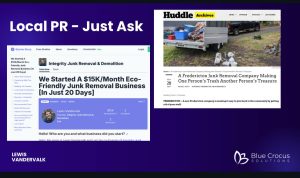
When we launched our junk removal business, we pitched a story to the local news. Two alumni from the University of New Brunswick were starting a new company — not just to remove junk, but to clean up the community.
We got featured in the local news. Then in Starter Story, thanks to an introduction from a friend. Both featured our website.
Lesson? Your story matters. Tell it. Share it. Get featured.
Whether it’s a podcast, a news article, or a blog — each one is another high-trust link pointing to your business.
Backlinks aren’t just about SEO—they’re about connection. They’re built on real-life stories, community involvement, and a bit of creativity.
Let’s talk strategy.
When you’re just getting started, don’t underestimate the power of your own backyard. Reach out to your local news stations and tell them what you’re up to. For example, maybe you’re running a discount for local residents. Frame it as a “startup special.” That’s newsworthy.
And then there are those wild, unexpected stories—like our client in Atlanta, Taylor Chasty. One day, he’s out doing junk removal. The next? He’s found some bombs. Literally. Police and fire departments show up, and local news jumps on the story. Taylor calls me: “How can I use this for PR?” Boom. We helped him get media coverage and backlinks.
You don’t need to stumble across explosives to get attention. Just take part in:
Say: “Hey, we’ll be at this event, offering something special. We’d love to be featured.” This helps build relationships with editors—people you can reach out to in the future with even more stories. When you launch something new, they already know you.
One common question: Can you build backlinks too fast?
Only if you’re doing it the spammy way.
If you’re buying 10,000 backlinks from Fiverr, yes—Google might get suspicious. But if you’re building legitimate, local backlinks from partnerships, testimonials, or news coverage? That’s perfectly natural. Google loves authenticity.
And the timeline helps you here. Real backlinks from real people take time to go live, get indexed, and show up on the radar.
There’s a hidden gem here: Featured.com (formerly HARO).
It’s $40 a month and super simple. Writers and journalists post requests like:
All you have to do is pick a question, write a short answer, and submit it. About 10% get accepted—and when they do, boom: you’re featured and linked.
You don’t have to wait to be famous. You just have to raise your hand.
Even if the feature isn’t directly tied to your niche, the backlink still counts. It’s a mention on a high-authority site. That’s gold for SEO.
Pick one strategy from everything we’ve covered today and commit to it this week.
Whether that’s:
…do it.
Aim for one backlink a week. That’s 52 high-quality backlinks in a year—and it compounds.
You don’t need to hire an agency to start. You just need to start.
Want a Podcast Backlink Too?
Chris asked a great question—how can you get on our podcast?
We’ve got two shows:
Want in? Just email: contact@bluecroc.ca. We’ll send you the sign-up link. No fancy speaking skills needed. Just show up and share your story.

Here’s the kicker—if you get a backlink and it’s never indexed by Google, it’s like writing a book and tossing it into the hallway of a library. No one will find it.
To fix that, use:
When your guest post goes live, copy the URL and submit it. That makes sure Google sees it, indexes it, and gives your site the credit it deserves.
One standout example: a junk removal company was listed on an Indiana .gov site with a domain rating of 90 (out of 100). That’s a huge signal in Google’s eyes. It included his domain and contact info — and it cost nothing but the effort to ask.
This tactic is rarely used. In fact, a few SEOs have told us, “Don’t share that. We don’t want everyone doing it.” But here we are — giving you the goods.
Now, let’s address something that comes up a lot: Does Facebook posting create a backlink?
Not directly.
When you post on Facebook — whether it’s a jobsite selfie, a community update, or a quick story about your dog — Google notices those signals. They don’t count as full backlinks, but they do act as indicators that your brand is active and relevant.
If you include a website link in the comments of your post, it can drive traffic to your site — and that traffic tells Google something. Social posts may be “fleeting,” but they still count as indirect ranking signals when done consistently.
If your page is active and has engagement, it can even rank on its own — especially on up
These strategies don’t require fancy tools or a marketing degree. Just real relationships, a bit of outreach, and the willingness to turn offline generosity into online credibility.